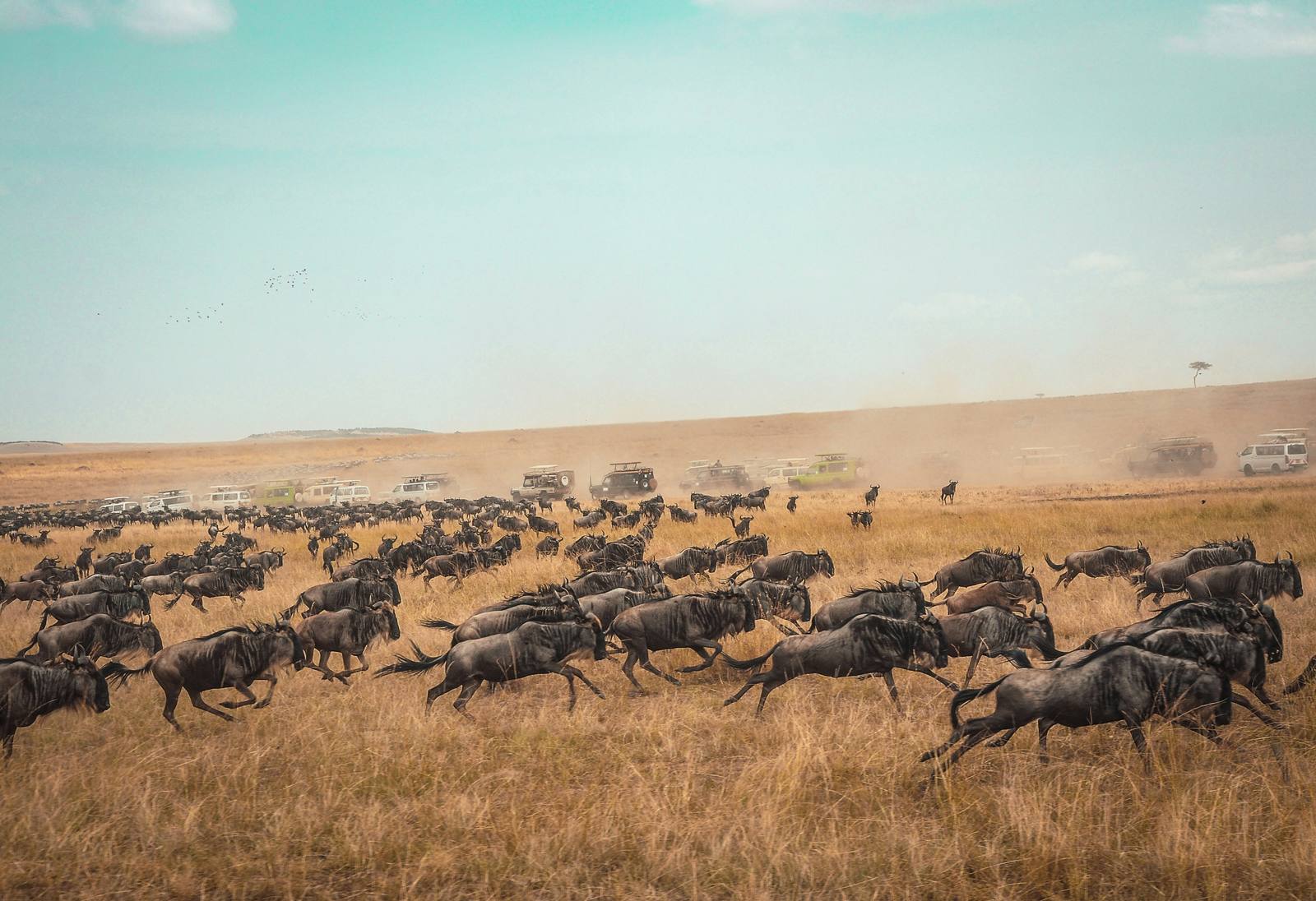
More than a million wildebeest, along with zebra and gazelle, move in a loop between Tanzania’s Serengeti and Kenya’s Maasai Mara, following the rains and fresh grass. The movement is continuous, so there is always something to see, but what you see depends on the month.
January to February: calving in the southern Serengeti
From late January into February, the herds gather in the southern Serengeti and calve. Newborns arrive in huge numbers, and predators such as lions, cheetahs and hyenas follow. It is a dramatic time for wildlife action, and it is dry, sunny and less crowded than the peak months.
March to May: the long rains
The rains turn the landscape green and the herds move north-west. It is the quietest, most affordable time in both countries. Expect afternoon downpours, and in the Mara, some slow roads. Mid-March to mid-May is among the quietest periods in the Serengeti.
June to October: river crossings
As the dry season sets in, the herds head north and face the Mara River. In the Serengeti, June to October is the best window for a crossing. In Kenya’s Maasai Mara, July to October is the best chance to see the spectacle, and August and September are the peak. This is also the busiest and priciest time of year.
November to December: the short rains
Herds drift back south towards the Serengeti as the short rains arrive. Showers are brief and usually fall in the afternoon, so game drives seldom suffer. Crowds are thin, and the scenery is fresh and green.
Which side should you choose?
Kenya and Tanzania both offer the migration at different times, and many travellers combine them in a Kenya to Tanzania circuit. If you are a Kenya resident, a Mara getaway can be a shorter and more affordable trip. Tell us your dates and what you most want to see, and we will recommend where to base yourself.
EXPLORE MAASAI MARA SAFARISSources
Fees and rules change. Confirm current figures with the official source or with us before you book.